
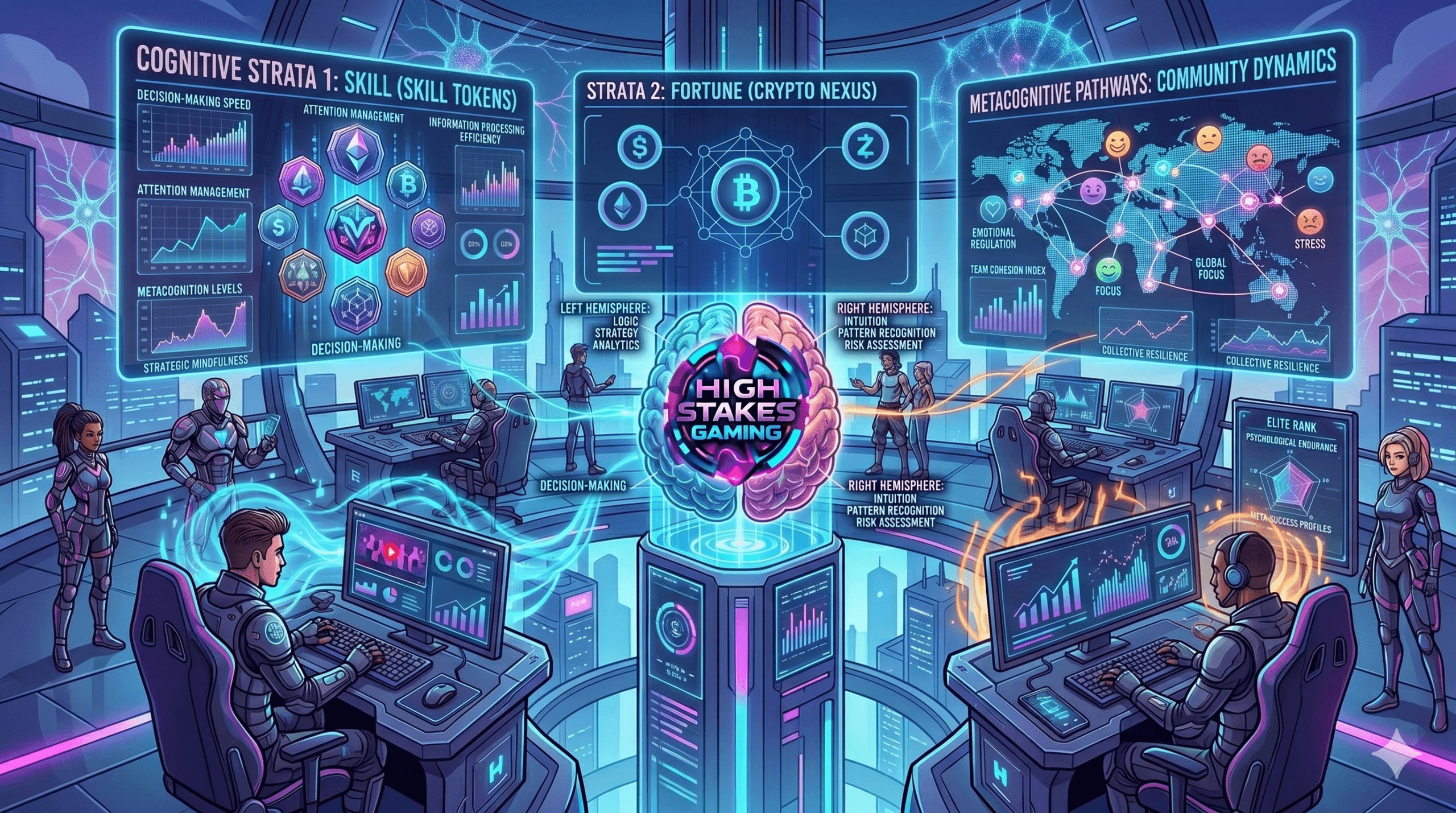
What separates consistent winners from the rest? Explore the mental edge and psychological habits of high stakes gaming champions.
Most people think the best gamers win because of faster reflexes or better gear. That is not wrong, but it is only part of the story. The bigger difference between players who consistently perform and those who plateau is almost entirely mental.
High stakes gaming psychology is what separates someone who cracks under pressure from someone who delivers their best performance exactly when it matters most. Understanding how the mind works in competitive play is not just interesting. It is genuinely useful if you want to get better.
Importance of Mindset in High Stakes Gaming
Your mindset going into a session determines more than you probably realise. Two players with identical skills can produce completely different results depending on how they think. One approaches the game believing that mistakes are part of learning. The other treats every error as a personal failure. Over time those two approaches lead to dramatically different outcomes.
The gaming mindset that actually works is built on one simple principle: focus on the process, not just the result. When you obsess over winning, you tighten up. You start playing not to lose instead of playing to win, and that shift in thinking affects every decision you make.
Players who develop a strong gaming mindset early also handle variance better. In any competitive environment, some outcomes are outside your control. A good mindset lets you extract value from a loss and move forward without carrying it into the next session.
This is the psychology of high stakes games in its most practical form. It is not about being emotionless. It is about not letting emotions make your decisions for you. Another thing worth understanding is the role of confidence. Confidence in gaming does not come from telling yourself you are great. It comes from preparation and repetition. When you know you have put in the work, the mental noise quiets down naturally.
Traits of Successful Players
If you spend time watching top level players, certain patterns come up again and again. These are not personality traits you either have or do not have. They are habits and ways of thinking that anyone can develop.
Adaptability is the first one. Successful players do not commit to one approach and refuse to change. They read what is happening in real time and adjust. When a strategy stops working, they move on without frustration.
Self awareness is equally important. Knowing your own weaknesses is not a disadvantage. It is an advantage because it tells you exactly where to focus your energy. Players who cannot be honest with themselves about where they are struggling keep making the same mistakes.
Consistency separates good players from great ones. Anyone can perform well occasionally. Performing well repeatedly under different conditions and pressures is a skill on its own. Pro gamer psychology places a huge emphasis on building routines that make consistent performance more likely regardless of external circumstances.
Patience is one that surprises a lot of beginners. High stakes gaming is not just about reacting fast. It is about knowing when to wait, when to hold back, and when to act. Impatience leads to rushed decisions and unnecessary errors.
Resilience rounds it out. Successful players lose. They lose a lot. What makes them successful is that they do not let a bad session define their next one. They process what happened, take what is useful, and let the rest go.
Managing Stress and Emotions in Competitive Play
Stress is unavoidable in competitive environments. The goal is not to eliminate it but to learn how to use it. A small amount of stress actually improves performance. It sharpens focus and raises your alertness. The problem starts when stress tips into anxiety and your thinking narrows to the point where you stop seeing your options clearly.
Learning how to think like a pro gamer means learning how to recognise that tipping point before it happens. Most experienced players develop personal signals — a tightness in the shoulders, shorter breathing, and rushing decisions — that tell them to slow down before things spiral.
Breathing is one of the most underrated tools in competitive gaming. Slow deliberate breaths before and during a session genuinely reduce the physical symptoms of stress. It sounds too simple to matter but the physiological effect is real.
Taking short breaks between rounds or sessions is not a weakness. It is a strategy. Mental fatigue compounds stress and causes errors that have nothing to do with skill. Knowing when to step away and reset is a skill in itself.
Emotional management also means dealing with frustration in the moment. When something goes wrong mid-session, the reaction in the following few seconds often determines how the rest of the session goes. Players who have trained themselves to pause, breathe, and refocus recover faster and lose less ground than those who let frustration chain into more mistakes. The players who manage this best are not naturally calmer people. They have simply practised it more.
Building a Winning Mental Strategy
Everything above comes together in how you approach your preparation and your sessions deliberately. A winning mental strategy starts before you ever load a game. It means setting a clear intention for what you want to work on. Not just playing and hoping to improve but deciding in advance what specific aspect of your game you are developing in this session. That focus turns time spent into actual progress.
It also means managing your energy honestly. Playing for six hours when your concentration starts fading after two is not dedication. It is grinding diminishing returns into the ground. Shorter focused sessions consistently outperform long unfocused ones.
Review is another piece that most casual players skip entirely. After a session, even just five minutes of honest reflection on what worked, what did not, and one thing you will do differently next time accelerates improvement faster than any amount of additional playing time.
High stakes gaming psychology also involves knowing how to prepare mentally before high pressure situations. Visualisation is a technique that sounds abstract but has been used seriously in sports psychology for decades. Before a competitive session, mentally walking through scenarios and seeing yourself making good decisions primes the brain for actual performance.
Finally, the mental strategy that ties everything together is consistency over intensity. A player who shows up every day with moderate energy and clear focus will outgrow a player who shows up twice a week burning themselves out every time. Building a winning mindset is not a one time decision. It is a daily practice. And the players who understand that are the ones who keep improving long after others have stopped.
Success in high stakes gaming is never just about what your hands are doing. It is almost always about what your mind is doing first.